Showing posts with label #bigbible. Show all posts

Monday, 22 April 2013

Discipleship and its Cost


This post was originally posted at #Bigbible Project on 10th Apr 2013


Discipleship and its Cost (@minidvr)

http://www.seedresources.com/view/images/fishing-nets
Having recently completed a course on ‘Deepening Discipleship and Pastoral Care I had cause to reflect on ’ Discipleship and its cost’.
We are all called to be disciples – aren’t we?  Mark 1:14-17 (NIV) points us to Jesus’ first call to his disciples;
14 After John was put in prison, Jesus went into Galilee,proclaiming the good news of God. 15 “The time has come,” he said. “The kingdom of God has come near. Repent and believe the good news!”  16 As Jesus walked beside the Sea of Galilee, he saw Simon and his brother Andrew casting a net into the lake, for they were fishermen. 17 “Come, follow me,” Jesus said, “and I will send you out to fish for people. “
I see this in the context of Proclamation of the Kingdom of God.   ‘Follow Me’ represents the institution of God’s Kingdom here on earth through Jesus.  And, the foundation of the Church, his body on earth.
It seems to me that the call ‘to follow him’ supersedes all other earthly calls, it’s from God the highest authority and overtakes any call of humanity, although it complements those human calls that are in accordance with God’s plan and intention for his world.
Being a disciple means surrender of self to God, its requires dying to yourself and rising in Christ  (Romans 6:8).  Paul gives us the idea of applying the patterns of Christ’s life to our own through Baptism.   He draws this out more in 6:10-12 (NIV).
“For the death that He died, He died to sin, once for all; but the life that He lives, He lives to God. Even so consider yourselves to be dead to sin, but alive to God in Christ Jesus. Therefore do not let sin reign in your mortal body that you should obey its lusts”. 

What does this mean?[1] 

ŸTo learn to go deeper in trusting Christ’s superior wisdom.
ŸCall to go beyond our wordly experience, tried and trusted routine and comfort zone.
ŸWhen we are at our worst – Jesus appears and invites us to try again, trusting his superior wisdom.
ŸChoosing to be naïve.
ŸDo it again, one more time, comes to people, who have lost their innocence and are defeated.
ŸDeep water – when we are most  vulnerable, events go beyond our control.
ŸEvery call is to enter back into the paradoxical wisdom of the cross.

Where does discipleship come from?[2]

Discipleship springs from Grace and is nourished in God’s grace.
ŸGrace without Jesus and the Cross is ‘cheap grace’.
ŸDiscipleship means ‘counting the cost of Grace’.
We can do nothing without Grace and need to seek it again and again.
We need to trust and learn to expect more from God’s overwhelming grace.
Early on, Jesus demonstrated the Grace and power that flowed from God through him: (Luke 5:1-11(NIV)).
“When Simon Peter saw this, he fell at Jesus’ knees and said, “Go away from me, Lord; I am a sinful man!” For he and all his companions were astonished at the catch of fish they had taken, 10 and so were James and John, the sons of Zebedee, Simon’s partners.  Then Jesus said to Simon, “Don’t be afraid; from now on you will fish for people.” 11 So they pulled their boats up on shore, left everything and followed him”.

Discipleship:[3]

A lifelong way of honouring the God, we love, celebrated in lifelong worship.
Grace leaves us awe struck!
ŸBeing a disciple is to learn to venture further on his sovereign authority!
We hear the sovereign voice of Jesus   “DON’T BE AFRAID”!
ŸTrusting a superior wisdom is the way of discipleship!
ŸWe will be catching men!

Discipleship can be costly:[4]

The early disciples paid with their lives for following Christ (Peter & Paul to name two).  You are called to make that same sacrifice if needed.
ŸBeing called means giving up all earthly ambition and desires and submitting ourselves to that of God while we seek the Kingdom of God here and now.
ŸLiving in God’s love and humility in a self sacrificial servanthood to others.

Why bother?

This is the question that we probably ask ourselves time and again, as we struggle to get through our daily lives.  Surely it’s easier to just ‘let go’ and accept that the here and now of our existence has to be enough and to make the best of it?
But, it seems to me that we are more than that.  We are uniquely created each person has integrity and is of value.  It’s our reliance on human, secular values that has allowed the world to become a troubled, place of conflict, poverty, and social injustice.   There is within us that sense of ‘otherness’ of something greater than ourselves.  Surely, we shouldn’t settle for the norm, but we should be seekin that spiritual nourishment and grace, which is only available from God.  It’s not actually case of we’re all in it together’ rather one of ‘God is in it with us’ and if we acknowledge that, we are hearing the call to be his disciple.

[1]based on CWR Discipleship Lecture, Wk 6, Pastoral Care in the local church,  Oct 09
[2]based on CWR Discipleship Lecture, Wk 6, Pastoral Care in the local church,  Oct 09
[3]based on CWR Discipleship Lecture, Wk 6, Pastoral Care in the local church,  Oct 09
[4]based on CWR Discipleship Lecture, Wk 6, Pastoral Care in the local church,  Oct 09
Print Friendly

Thursday, 24 January 2013

The Call of Abram


The Call of Abram #Genesis 12 #bigbible (@minidvr)

When I was pondering on what I might write for my Janurary post, I allowed my NIV bible to fall open in Genesis at random.   It opened at Genesis 12 – The call of Abram:
Abram & Sara
Used with Permission: Lars Justinen (Purchased by @)
12 The Lord had said to Abram, “Go from your country, your people and your father’s household to the land I will show you.
“I will make you into a great nation,
and I will bless you;
I will make your name great,
and you will be a blessing.[a]
3 I will bless those who bless you,
and whoever curses you I will curse;
and all peoples on earth
will be blessed through you
Why I wondered had God chosen this particular passage, perhaps it’s because my journey so far has been seeking to answer his call, without I must admit, with a discernible level of success.
But there are elements here that ring true in some ways!
“Go from your country, your people and your father’s house to the land I will show you”.
I live in North Kent, yet I worship and belong to a Parish 54 miles away at the other end of the county. I joined the parish when I was serving in the Army, away from my home, somehow God called me back to him, and to be in a strange place.  To minister to the people there and not at my home. The follow on from this was a vocation for ministry in that place, which has extended to my wife and we now both feel a strong call to do what Abram was called to do.  To up sticks and move away from family and friends and to live and work in that place.  So far, events have prevented that happening, but crucially, we see the door, partly opening, opening wide as my spouse moves to her retirement in 2013.
“I will make you into a great nation, and I will bless you; I will make your name great”
The implications of this passage are not as clear.   Considering that I am in my sixties and my spouse is close to sixty, it’s unclear how our nation will increase or become great.   We are reassured though that we have five grandchildren, who might increase the nation naturally in due course. Although, I wonder if the world is ready for a whole new clan of @’s? 
We feel very strongly that we have been blessed!  Since returning to Christianity and following that initial call, our lives have been transformed.   We’ve been on a journey of faith, which has taken us to different places.  This journey has been wild, exciting and frustrating at times.
Seeking God’s will is a little like a treasure hunt, where the person who sets it up, forgets where they have hidden the prize – meaning random wanderings, occasionally through perseverance finding an occasional clue, but never quite finding the ultimate prize. Getting those glimpses is a thing of joy, but also one of impatience and frustration. The Church can sometimes seem to be the villain in this, moving slowly, nearly imperceptibly forward, while seeming to be placing obstacles in the path. I see these as a test of sorts, of character, of perseverance but also of formation – because despite the frustrations, each episode results in new insights and new points of growth.
At this stage on the journey, we’ve been given a slightly wider glimpse of a possible pathway as Parish Missioner – but just as it starts to develop as a joint vision, the Church has taken the chief facilitator away to a new appointment?  Murphy’s Law? or another test? So, another delay, but one with some positive aspects as I embark on the first stage of training for it with #Deepening Discipleship at CWR Waverley commencing this month.
“I will make your name great, and you will be a blessing”.
This one is a little more problematic.   I am not seeking to make my name great. Rather the opposite, to serve where God is calling me humbly and with humility (is that a sign of vanity?).  If I am blessed, I hope that by the Grace of God, I am able to share those blessings with others, and by doing so, making the Word and Name of God known in the hearts of others.
I will bless those who bless you, and whoever curses you I will curse; and all peoples on earth will be blessed through you”.
Wow,  I thank God for his blessing, but I hope that he doesn’t curse anyone for my sake, because my cursing anyone is the last thing on my mind!  In some ways this reminds me of Matthew 7.1(NIV) “Do not judge or you too will be judged”. 
Judgment in biblical Old Testament terms can have some quite drastic consequences. I wonder if not judging others prevents our forming opinions or views between what is right or wrong behaviour and seeking to amend that behaviour?
Paul in Romans 2.1 tells us to “avoid rash, censorious and unjust judgment” and Luke in 6.7 explains it in termsof condemning.  If Christ doesn’t judge censoriously, why should I?
If I were to ‘curse’ all Bankers, would God curse them as well?  I think that it comes back to the old expression which while not in scripture in this form “Love the Sinner – not the Sin”.
I pray that from this passage, people will be blessed through God allowing me to be an instrument of his Grace in the world.
In summary, just wandering through the bible, allowing it to drop open at a particular place or chapter can be thought provoking and stretch your imagination a bit more.  Must do it more often as I embark on a ‘Year with the Bible’ in the next few days.

This post was originally submitted to #Bigbibleproject and published on 10 January 2013 
http://bigbible.org.uk/2013/01/the-call-of-abram-genesis-12-digidisciple-by-minidvr/

Saturday, 1 December 2012

Does God take us on a Mystery Tour


Does God Take us on a Mystery Tour? @minidvr

http://twelvebaskets.co.uk/view/images/moon-mystery
Sometimes we get insights from scripture, sometimes someone else points us towards a scripture passage, which has come to them while they were thinking of you, or perhaps interacting with you in some context or other.  The Bible can be inspirational in many contexts and not necessarily directly to you, but may inspire someone eles, who is sharing your journey in the Christian faith.
Recently, someone sent me a PM on Facebook,  prompted by my writing  something about  new developments in the Lay Ministry role I have in my parish!
They quoted: Isaiah 58:11
The Lord will guide you always; he will satisfy your needs in a sun-scorched land and will strengthen your frame. You will be like a well-watered garden, like a spring whose waters never fail. 
I’m not sure what I had written to inspire that particular quote, but it just seemed to chime  in with the theory that I hold that God is taking me on a Mystery Tour, releasing on bit of information on the way, while I struggle to discern what he might be saying or pointing me towards.   A timeline roughly being:
2008
 I came back to Christianity in 2008, God seems keen to keep me on my toes!
Firstly, he pointed me towards a particular place, church and community.  OK, deal!
Next, he pointed me towards confirmation as an Anglican.  Ok, Deal!
2009
Next, he pointed me God only knew where, but it, after a few months of mystery, turned out to be a possible vocation to some form of ministry in my home parish.  OK, Deal!
2010 – 2011
Next, he pointed me towards discerning the vocation as towards Ordained Ministry. OK, Deal.
Next, he took me on a wonderful journey of discernment, of growth, academic stutdy, prayer, spirituality and interaction with some wonderful people.  OK, Deal.
2012
Next, the journey became painful, he sent me to BAP.  OK, Deal?  Not a done deal after all?  Recommeneded for Ministry in the Church of England, but not Ordained Ministry. OK, Deal, of sorts.
Next, well, wait out and see for about 6 months. Use this to  work through the implications of the ‘Not’ and get over the baggage.  OK, Deal!
Next, October 2012 -  Meeting to discuss a possible way forward with Vicar – Vision shared..
His vision for future ministry to be developed as Parish Missioner?  What on earth is that?  Well, here goes:
Stage 1:   To continue existing role(s) which will be formally authorised in early 2013.
Stage 2:  To widen Parish  Mission and Ministry  via our website and the use of social media to meet an identified need as we move forward towards future pastoral re-organisation with a neighbouring benefice.
Stage 3 : To attend formal training as an Authorised Worship Leader under diocesan auspices from September 2013.
Stage 4:  to be developed once the first three are achieved.
What to do next?
  • Ÿ  How to develop our website to integrate with social media to increase our outreach in a way that they are seamless interactive – to work with our Web Master on this.
  • Ÿ  Look at drafting a simple, short, concise parish mission statement.
  • Ÿ  A job description and working agreement – appropriate to the role as it develops.
  • Ÿ  Book training as appropriate.
I know that God has a sense of humour, but the mystery tour isn’t over yet.  The headlines of the proposed role while appearing clear cut, have lots of stuff to be worked out prayerfully and with others over the next few months.
The challenge is there.  And it’s really exciting.    Get used to being on a mystery tour.  Take nothing for granted, expect the unexpected and hope for the the best.
To me this mystery tour  reminds me of Proverbs 1-2:7
2 for gaining wisdom and instruction;
for understanding words of insight;
for receiving instruction in prudent behavior,
doing what is right and just and fair;
for giving prudence to those who are simple,[
knowledge and discretion to the young—
let the wise listen and add to their learning,
and let the discerning get guidance—
for understanding proverbs and parables,
the sayings and riddles of the wise.[b]
The fear of the Lord is the beginning of knowledge,
but fools[c] despise wisdom and instruction.
One of the things about a mystery tour is to be open to  excitement, often scary things, but open hearted and committed to where God might be taking me – and the journey looks to continue on track for more mystery in the future.  All I can say, is bring it on.
Print Friendly
This post originally appeared on the #digidisciple project on the #bigbible site on 10 Nov 2012.

Saturday, 19 May 2012

Things Happen - Thoughts on Suffering


Originally posted on the #digidisciple blog on 10th May 2012

Things Happen! – Thoughts on Suffering #BigBible @minidvr

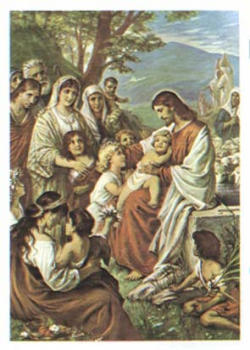
http://spiritlessons.com/Documents/Jesus_Pictures/Jesus_025.jpg
I often wonder about things?  How and why they happen.  Perhaps ‘cause and effect’.  For an atheist ‘suffering’ is just an accident of nature, which might or might not have a scientific or philosophical explanation, but it’s one of their evidences that God doesn’t exist.
Coming from a Christian perspective, we believe that things happen because either God wills them, or because mankind, going against the will of God, causes bad things to happen.   ‘Simples’ as the Meerkat says.
However, life isn’t that simple and good and bad things happen all of the time, which cause me to stop and think, either ‘how wonderful’ or more often ‘how awful’, and I ponder on how and why God allows natural disasters and suffering to persist in the world?
It appears that Suffering is the  symptom of man exercising his free will and sinning.  Sin is anethmae to God, who sent Jesus to rescue man from his sin through his death and resurrection.  Our continuing sin, contributes to continuing suffering and allows God’s work to be seen in the word?  We haven’t got a good bargain there then!
It seems that God allowed the creation of sin and suffering in the first place?  This is the paradox.   Cause and effect equal cause and effect in a never ending cycle, until God’s will is done.  And it will only be done, when Jesus comes again.
Looking for guidance I find:
Isaiah 55.8 tells us that God thinks and acts on a level different from ours. He sees things from a much broader overview. From our perspective, it’s as though we were putting together a jigsaw puzzle with many of the pieces missing. What part of the picture are we failing to see?[2] God has a plan!
Paul says that “I have been crucified with Christ” (Gal: 2.2) and “I complete what is lacking in Christ’s afflictions for the sake of His body, that is, the Church (Coll 1.24)  He really underlines it with : “For it has been granted to you that for the sake of Christ you should not only believe in him but also suffer for his sake” (Phil 1:29).  God’s plan in fruition!
Jesus himself points us towards suffering for his sake. ““I can of Myself do nothing. As I hear, I judge; and My judgment is righteous, because I do not seek My own will but the will of the Father who sent Me.”  (John 5:30)God’s will is being seen to be done!
This is all well and good, but when we are seeing so much death and destruction wrought around the world and in people’s lives – how can we reconcile ourselves to the fact the we seem predestined to suffering, with no control over how and why it happens, even if our freewill is used for the good, there are so many others where it isn’t. It is a hard a burden to bear?  It’s certainly not the bargain we signed up to, we had no choice in it, it was created for us.
Ah, We’re told that God’s plan includes suffering to allow God’s work to be visible in the world.   So, cause and effect is God’s way of helping us to obey the two greatest commandments (Mark 12:28-31).  Because these two commandments underpin all of the law given to us through scripture and the biblical stories of the Jews as the chosen people.
I read this commentary:[3]
Ÿ Evil and suffering are real – not illusions. They are ‘intrusions’ into the good world God originally made. The bible tells how when Jesus came to earth he stood outside the tomb of his best friend Lazarus and saw the bereaved sisters:   When Jesus saw her weeping, and the Jews who had come along with her also weeping, he was deeply moved in spirit and troubled. (John 11:33)  Literally he was ‘angry’ – death was seen by Jesus as a violent and horrible invasion into his Father’s world.
Ÿ  Ultimately, suffering is linked to our rebellion against our Maker. It is a reminder that the world we live in is ‘out of sorts’ with God and stands under judgment.  ‘Therefore, just as sin entered the world through one man, and death through sin, and in this way death came to all men, because all sinned–’ (Romans 5:12)
Ÿ  This does not mean that every ‘item’ of suffering is a direct punishment from God. This was a question the disciples asked of Jesus about a man born blind: ’Who sinned, this man or his parents?’ Jesus’ reply pointed them beyond the suffering to God’s rescuing purposes in himself – “Neither this man nor his parents sinned,” said Jesus, “but this happened so that the work of God might be displayed in his life.” (John 9:3)
Ÿ  Both man made suffering and ‘natural’ suffering should focus our minds on ultimate issues, causing us not so much to ask ‘Why doesn’t God do something about this?’ but “what is my response to this? How might I change?”

Finally, some enlightenment.  It’s not in fact God’s plan to allow suffering.  It’s not God’s plan to allow sin and death.   God’s plan was subverted by Man’s free will, and by the actions of Adam and Eve, tempted by the serpent, which caused original sin, caused the fall of man, caused mortal death and decay and caused sin and evil in the world.  If I change, perhaps others will change. If others change, we may get the ‘wave’ effect we see at large sporting events.  The stone cast in the pond, causing the ripples to spread wider and wider. God’s will coming to its true fruition.
Twitt

About bigbible

The #BigBible Project. Educating in the digital spaces, creating 'bigger Bible conversations' between 'digital disciples'. Ran the #bigread12.

Friday, 10 February 2012


Who Discerns? #digidisciple (@)

http://upload.wikimedia.org/wikipedia/commons/c/c8/Albrecht_Dürer_043.png
Following last months post[2]on ‘the call’, I’ve moved on to the next word ‘Discernment’.  I thought  about the old joke about “How many Vicars does it take to change a light bulb? Answer – None, as they’ve already seen the light”.Perhaps the question should be, “How many Vicars does it take to discern a vocation?” I’m not sure that I have a complete answer to that one..
Discernment[3] has many different definitions,  but the one that I feel  fits  quite well when discerning a vocation seems to me to be: Perception of that which is obscure”.  As the vocation can be pretty obscure to those involved.
God’s Will need to be discerned.
The individual seeks to discern where a call to ministry could be taking them, it can be a painful, slow process, requiring a great deal of trust in God and hope that his will for you to be discerned fully.
The Spouse/Partner needs to be aware of the vocation. Their  discernment and understanding and support for the life changing things the vocation will bring will be essential if the vocation is to be fulfilled.
The Parish Priest seeks to discern with the individual their possible vocation.  This is the first  formal  step in the discernment process.  They pass on the offer for ordination to the wider church.
The Parochial Church Council might be involved in discernment, particularly if they going to have to support any future ministry.
The Church  operates a  ‘Discernment’ process. This explores the authenticity and validity of a  vocation.  It seeks to discern God’s will for the gifts that you offer and how they might be best deployed.  This is delegated by the Diocesan Bishop to a Diocesan Director of Ordinands (DDO) perhaps with assistants.
Spiritual Director (Accompanist) A vital part of any vocational journey, the SD is there to assist and support the candidate in their journey of and growth as a Christian.  Their support for the candidates as they wrestle with discernment is vital.
The DDO works with a candidate exploring a vocation. Once they discern that a candidate is ready to move forward (or for the offer to be declined) they advise the Bishop and arrange attendance at a form of selection.
Bishops Advisors appointed by the Bishop (some Ordained, some Lay) to conduct an assessment of  candidates to discern  to whether they meet some or all of the nine criteria for ordination and be capable of having a successful ministry.  They make an initial recommendation to the bishop.
The Bishop meets a candidate to discern for himself whether his DDO and Advisor’s reports are accurate. Ultimately, his discernment (and discretion) is the vital one.  It is solely within his remit whether a candidate goes forward for selection and training and eventual ordination.
Bishops Advisory Panel (BAP) (National Selection). Takes the candidates away to a secret location and carries out a formal discernment (selection) process which tests, assesses, evaluates all aspects of a candidates suitability for training.   The BAP makes a recommendation to the diocesan bishop of Yes, No, Not Yet. and the training path for successful candidates.
The Bishop sees the candidate after BAP and gives them his decision. He has the discretion to overrule any recommendation of the BAP if he discerns a different path for training and eventual ordination.
Theological Colleges The discernment process doesn’t end after BAP, it continues throughout training and formation for ministry and various individual’s will be consulted and submit reports on progress to the bishop through the DDO during training, which could be stopped at any point, up to and including ordination.
Post Ordination The Bishop, DDO and the Training Incumbent and those involved in Continuing Ministry Education will continue to operate the discernment process throughout curacy and through to a post of ‘First Responsibility’.  The individual will continue to discern their vocation throughout their life and service in ministry.
Pitfalls and Hurdles and Hoops to Jump Through.  Although not announced as part of the discernment process, they are as much part of it as the candidate, Vicar, DDO, Bishop, Bishop’s Advisors. They are either natural or artificial barriers to candidates testing a vocation through to fulfilment.  Some seem quite arcane, some parts are quite obscure, what seems to be clear throughout is that it’s God’s will that is being discerned, not that of the individual, Vicar, DDO or Bishop.
I’ve probably been in every pit, hurdled and jumped quite a lot in the process so far, with still some way to go.  But I’m still here ready and waiting for the call to be discerned.
The Holy Spirit. Without the Holy Spirit’s involvement, God’s will would not be fully discerned.
Prayer and Theological Reflection: Are two essential ingredients to the process as are personal qualities such as acceptance, patience, perseverance and a good sense of humour.
May God’s Will be done.

THE WILL OF GOD
The will of God will never take you:
Where the grace of God cannot keep you
Where the arms of God cannot support you
Where the riches of God cannot supply you
Where the power of God cannot endow you
The will of God will never take you:
Where the Spirit of God cannot work through you
Where the wisdom of God cannot teach you
Where the army of God cannot protect you
Where the hands of God cannot mould you
The will of God will never take you:
Where the love of God cannot enfold you
Where the mercies of God cannot sustain you
Where the peace of God cannot calm you
Where the authority of God cannot overrule for you
The will of God will never take you:
Where the comfort of God cannot dry your tears
Where the Word of God cannot feed you
Where the miracles of God cannot be done for you
Where the omnipresence of God cannot find you
Everything happens for a purpose
We may not see the wisdom of it all now
But trust and believe in the Lord
That everything is for the best!
Author Unknown

[1]Picture of Job by Albrecht Durer (1471-1528) from Commons WikiCommons

This post first appeared at the #bigbible project on 10th Jan 2011

Thursday, 15 December 2011

Called to What?


This was originally posted at the Big Bible Project

I’ve been exploring a [1]vocation within the Church of England for a little over two years.  The exploration has been a journey of ups and downs, but mainly ups.  The process described as ‘discernment’ is for the church to discern an individual’s vocation (or call) to ministry, to select and to train and form the individual for their future ministry.  The system is national, with local variations, diocese by diocese.  The process appears convuluted and can be prolonged, but at the end of it, you hope that your call will be discerned and that you will go forward for training for the type of ministry you feel called too.
While I have my own blog[2], I have been excited and envigorated by the Big Bible and digidisciple concepts, in particular the digidisciple blog posts, some from people who I know, or enjoy online relationships with, and others who I don’t know, but want to very soon.  The concept seems to me to be very enabling and particpatory, which has been very much my experience in the vocations journey so far.
So, why write another blog?  I thought that I might write on how I feel about the terminology of the discernment process and how in other contexts words, phrases or terms used relate  speak to me of other things or places in my life, which might point to something different..
I come from a military background, my original ‘call to serve’ was as a soldier.  The first word I’m thinking about is ‘call’! In military terms you might use it to describe a summons to duty, the one perhaps familiar to most people would be the bugle calls ‘Reveille and Last Post’. It is also a call to war.  I’m reminded of of the Poem by Robert Willian Service[3], written from France in August 1914, just after the start of the Great War of 1914-1919.

The Call:

Far and near, high and clear,
Hark to the call of War!
Over the gorse and the golden dells,
Ringing and swinging of clamorous bells,
Praying and saying of wild farewells:
War! War! War!
High and low, all must go:
Hark to the shout of War!
Leave to the women the harvest yield;
Gird ye, men, for the sinister field;
A sabre instead of a scythe to wield:
War! Red War!
Rich and poor, lord and boor,
Hark to the blast of War!
Tinker and tailor and millionaire,
Actor in triumph and priest in prayer,
Comrades now in the hell out there,
Sweep to the fire of War!
Prince and page, sot and sage,
Hark to the roar of War!
Poet,  professor and circus clown,
Chimney-sweeper and fop o’ the town,
Into the pot and be melted down:
Into the pot of War!
Women all, hear the call,
The pitiless call of War!
Look your last on your dearest ones,
Brothers and husbands, fathers, sons:
Swift they go to the ravenous guns,
The gluttonous guns of War.
Everywhere thrill the air
The maniac bells of War.
There will be little of sleeping to-night;
There will be wailing and weeping to-night;
Death’s red sickle is reaping to-night:
War! War! War!

http://media.photobucket.com/image/jesus%20gun/elite_17/jesus-machine-gun.jpg?o=10
Service wasn’t against military service itself.   He enlisted, at age 41,  despite being unfit, before being discharged. He later served as a war correspondent and as a stretcher bearer and ambulance driver with the American Red Cross. Reading this poem, it seems to me to have been prothetic, given that it was written at an early stage of the war, before some of the great war poetry was written by the likes of Rupert Brook[4], Wilfred Owen[5], and Siegfried Sasoon[6].

Why does this speak to me?

Having spent the greater part of my adult life in uniform, several tours of which were active service. Not in today’s context, but the no less dangerous environment of Northern Ireland.    Somewhere along the line, perhaps in the last two years of service, the call to serve in the vocation of military got lost somewhere.  I’m still trying to work out whether it was conscience or disilluison or just plain fatigue?  But somehow, sending more and more young men off to pointless wars seemed illogical and in the case of the second Iraq War, illegal.  We seemed to have gone to war purely on a fabrication of the existence of Weapons of Mass Destruction.
Don’t get me wrong.  I am not ashamed of my service. I am proud to have served. I remain enormously proud of our armed services and the job that they are doing, and will continue to do.   I just know that I have somehow become a pacifist.
I became a Christian fairly late in this process, which I’m sure had some impact on my thought process. It was the start of a process of transformation which led to where I am now. With a new ‘call to serve’ but God, not war.  It’s started, where will it take me next?